How do I make sure someone finds out when the line goes down overnight?
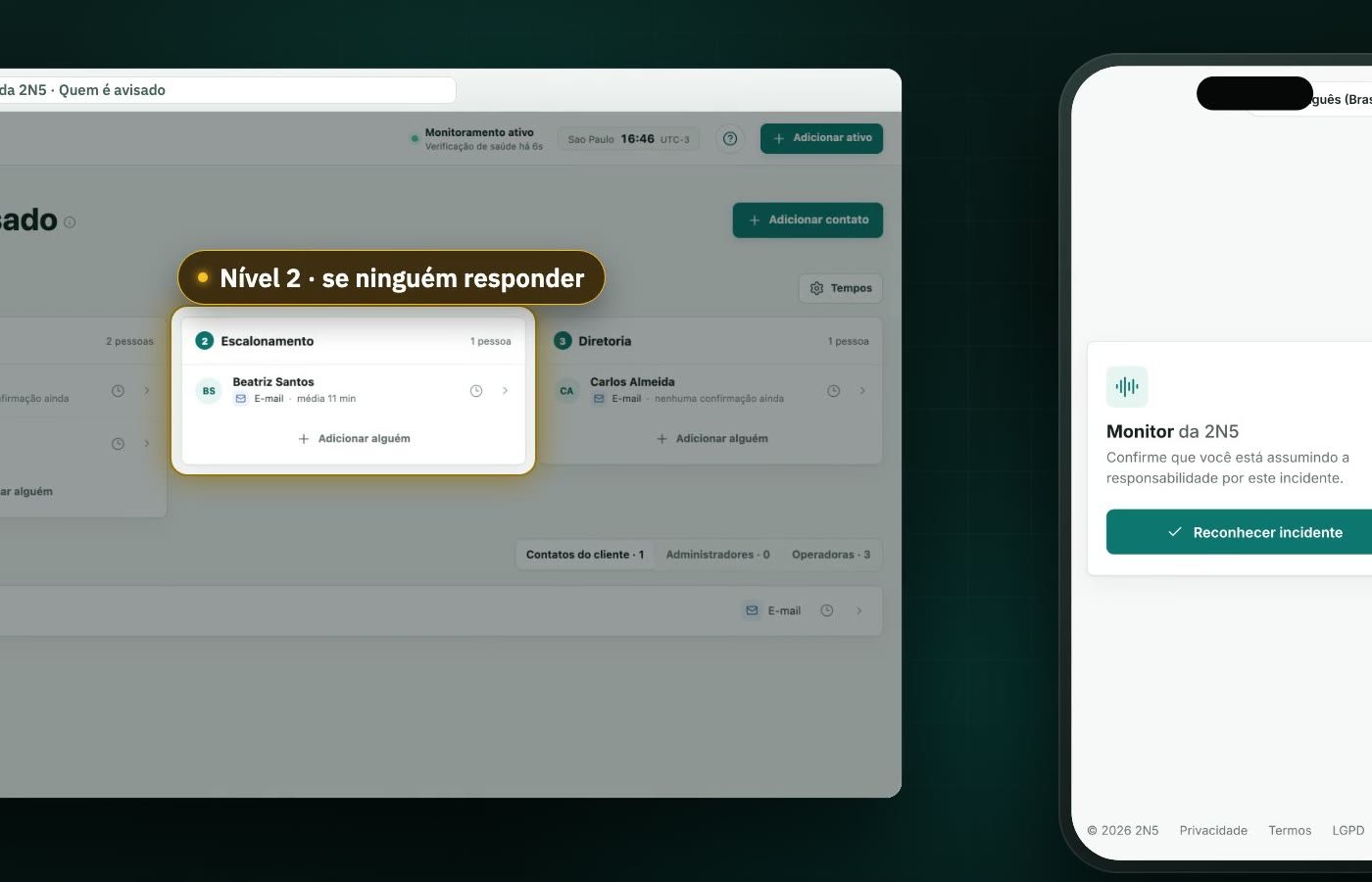
With an escalation ladder that does not stop until someone takes ownership. In Monitor, every confirmed incident notifies tier 1 by email and SMS. If nobody acknowledges within the agreed time, it notifies tier 2, then tier 3. A single acknowledgment, one tap on the SMS link, stops the escalation and records who took ownership.
What happens between the failure and the alert?
| Moment | What Monitor does |
|---|---|
| A test call fails | Retries the call at your pace; nobody is notified yet |
| Consecutive failures (four by default) | Opens an incident with the evidence: SIP codes, Q.850 causes, every call |
| Incident opened | Notifies tier 1 and the customer contacts, by email and SMS |
| Nobody acknowledged in time | Notifies the next tier, up to the last one |
| Someone acknowledges with a tap | Stops the escalation; the incident shows who and when |
| The circuit recovers | Closes the incident and tells the customer contacts it has been resolved |
The time to first acknowledgment goes into the SLA reports as the average response, to show how long the team takes to take ownership.
Who is outside the ladder but still notified?
- Customer contacts: notified when a service has a problem, including poor voice quality, and when it is resolved. They are not part of the escalation.
- Administrators: notified when no tier acknowledges.
Why do only confirmed failures become alerts?
Because an alert at 2 a.m. has to be real, or the team stops paying attention. A one-minute blip, a route that failed once, or a problem on 2N5’s own side never wakes anyone up. When the fault is 2N5’s, the test is marked blind, does not count against the circuit, and 2N5 is the one that gets the notice.
Can alerts be silenced during maintenance?
Yes. A maintenance window covers the circuits you choose, at a scheduled time. During the window, failures on those circuits do not open an incident.
Frequently asked questions
Which channels do alerts come through?
Email and SMS. The SMS is short and carries a link; one tap on it confirms you have taken ownership of the incident, without signing in to the system.
Does a passing glitch trigger an alert?
No. A failed call is retried, and only consecutive failures, four by default (the first plus three retries), open an incident. Only a confirmed incident starts the ladder.
What happens when someone acknowledges?
Escalation stops. One acknowledgment is enough: the next tiers are not woken up, and the incident shows who took ownership and when.
What if nobody acknowledges?
The alert moves up tier by tier, on the timing you set for each one. If no tier acknowledges, your company's administrators are notified.
How do I avoid alerts during scheduled maintenance?
With a maintenance window for the affected circuits. During the window, failures on those circuits do not open an incident and nobody is woken up.